There’s a reason the cushion cut has never really gone out of fashion. Soft corners, deep facets, and a warmth to its sparkle that rounds and ovals don’t quite replicate. A cushion cut lab diamond engagement ring pairs all of that with the very real financial advantages of lab grown pricing, and the result is one of the most personally resonant choices in the engagement ring category. If your partner loves something that feels vintage-inspired without looking dated, read on.
What Is a Cushion Cut Diamond?
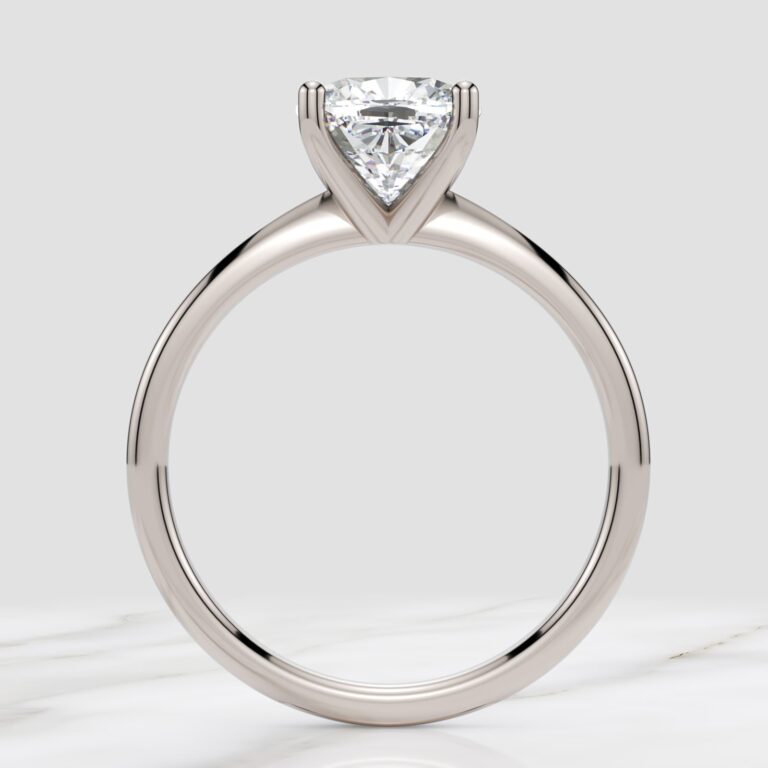
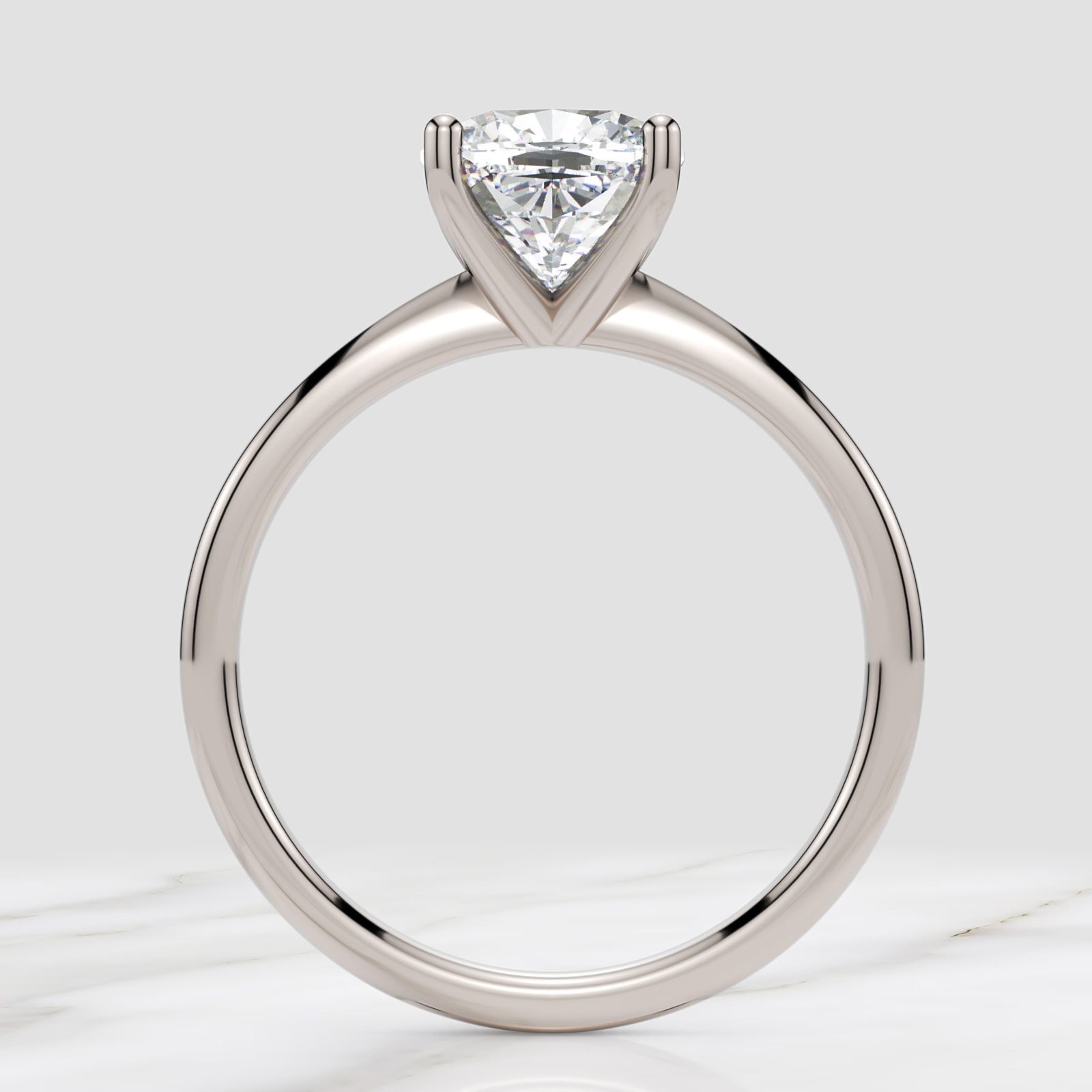
The cushion cut is essentially a square or slightly rectangular diamond with rounded corners and larger facets. Those larger facets create broader flashes of light rather than the tight, rapid sparkle of a round brilliant. The effect is warmer and more romantic, with a depth of fire that catches the eye in low light as much as bright sunlight.
Maker and Stone describes the cushion shape as offering “vintage-inspired facets with a rounded, romantic outline.” That description nails the personality of the cut. It looks like it could have come from another era, but in a good way. It’s distinctive without being eccentric, and it ages beautifully on the hand as years pass and the ring becomes genuinely sentimental.
Why Choose Lab Grown for a Cushion Cut?
The cushion cut doesn’t carry the same premium as a round brilliant, because rounds are cut to maximise light performance and waste more rough crystal in the process. That already makes cushion an efficient choice in terms of cost per visible size. Lab grown pricing amplifies this further.
A cushion cut lab diamond engagement ring at Maker and Stone starts from A1,730inthePariswhitegoldsolitairewitha1.58ctcushionlabgrowndiamond.TheyellowgoldversionofthesamesettingstartsfromA1,755. For a 3ct cushion in the Paris white gold setting, pricing begins at A$2,535. Every setting comes with a GIA or IGI grading certificate, 18ct gold construction, insured shipping, and a lifetime warranty on craftsmanship.
The Paris Setting for Cushion Stones
Maker and Stone’s cushion diamonds are currently offered in their Paris collection, which suits the cushion shape particularly well. The Paris setting uses four precision-set prongs and an open basket that sits low on the finger. That open basket is important for a cushion stone, because it allows light to enter from below the diamond, enhancing the stone’s warmth and depth.
The Paris setting is available in both 18ct white gold and 18ct yellow gold. Yellow gold is worth considering for a cushion cut, because the warm tone of the metal complements the deeper, warmer light behaviour of the cushion facets. White gold is equally beautiful and offers a cleaner, more contemporary contrast. The choice comes down to her personal style and which metal works best with her other jewellery.
What Carat Weight Is Right for a Cushion Ring?
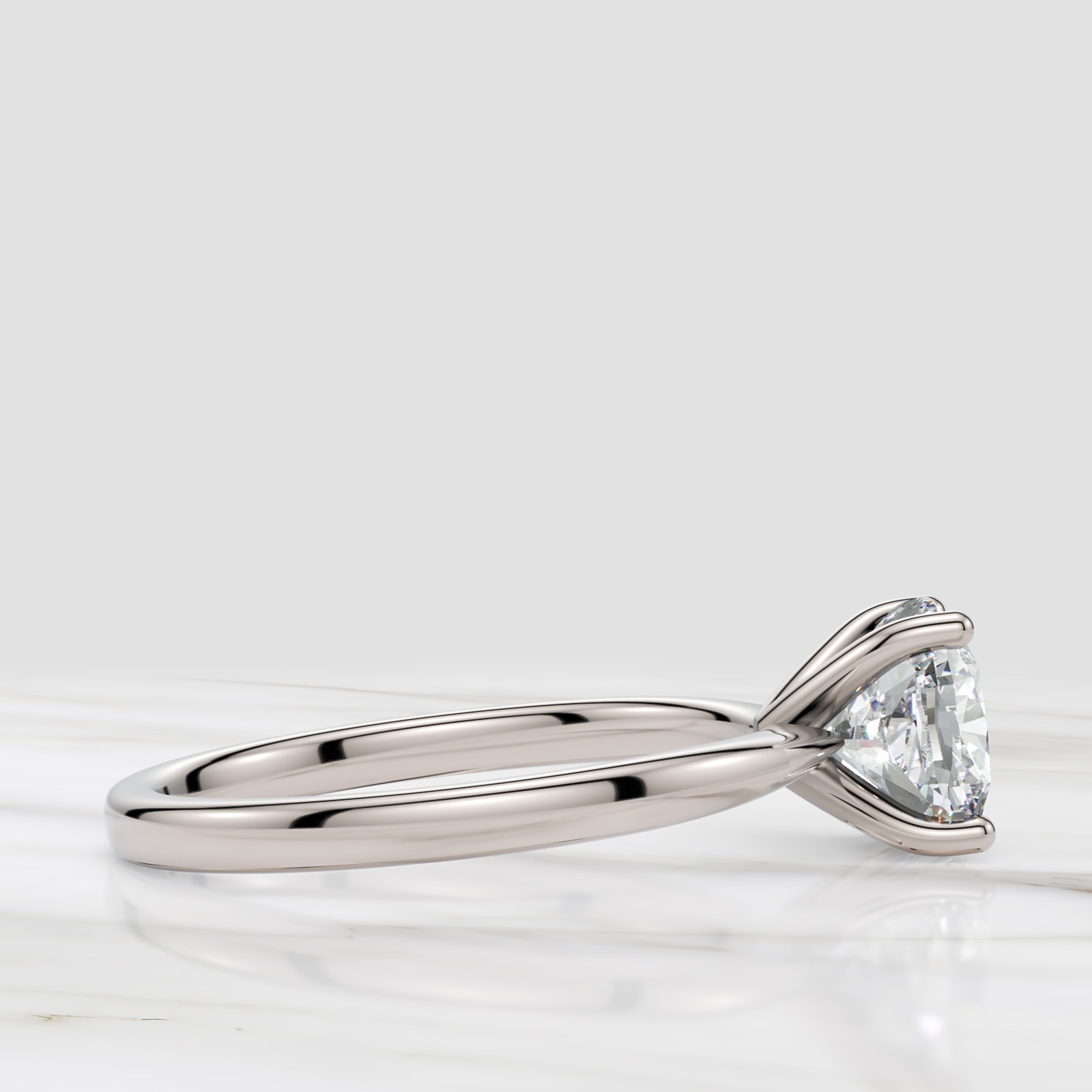
Maker and Stone’s cushion stones are photographed and priced at three carat tiers. The 1ct tier is described as “considered and everyday,” the 2ct as “a confident middle ground,” and the 3ct as “the statement piece.” For a cushion cut specifically, 2ct is a popular sweet spot. The stone’s broader facets mean it reads as generous and substantial at that weight, and the deeper light behaviour of the cut makes it look rich and impressive without needing to push into 3ct territory.
That said, lab grown pricing makes the 3ct cushion genuinely accessible at Maker and Stone’s price points. The Paris white gold 3ct cushion at A$2,535 is, by any measure, exceptional value for a 3.06ct stone in 18ct gold with a lifetime warranty. This is the kind of combination that simply wasn’t realistic with mined diamonds at this budget level.
How Durable Is a Cushion Cut Diamond?
Every diamond, lab grown or mined, sits at 10 on the Mohs hardness scale. That’s as hard as anything it will encounter in daily life, except another diamond. The cushion cut’s rounded corners actually make it slightly more resistant to chipping than sharper-cornered cuts like princess or emerald, because there are no points where pressure concentrates. It’s one of the more practically robust shapes to wear daily.
The setting matters too. The four prong design of the Paris collection protects the stone without covering so much of it that the diamond loses light. Prongs should be checked periodically over the decades, because they thin with wear. Maker and Stone’s lifetime craftsmanship warranty covers their work, and their care guide outlines the check-up schedule that keeps a stone seated safely.
Conclusion
The cushion cut lab diamond engagement ring is for someone who wants a ring with personality, warmth, and a romantic quality that sets it apart from the more common round brilliant. With prices starting from A1,730fora1.58ctstonein18ctgoldatMakerandStone,andtheoptiontoscaleuptoa3.06ctstoneatA2,535, it’s also one of the best value propositions in their collection. Designed on the Central Coast and finished by hand in their Sydney workshop, each ring is made to order and backed by a lifetime warranty.
FAQ
What makes the cushion cut different from other diamond shapes?
The cushion cut has rounded corners and large facets that produce broader flashes of light with a warm, romantic quality. It’s inspired by vintage styles but translates beautifully into contemporary settings.
Is a cushion cut good for everyday wear?
Yes. The rounded corners make it more chip-resistant than sharper cuts like princess, and a diamond’s hardness of 10 on the Mohs scale means it holds up well to daily wear.
What does a 3ct cushion lab diamond ring cost at Maker and Stone?
The Paris white gold solitaire with a 3.06ct cushion lab grown diamond starts from A2,535.TheyellowgoldversionstartsfromA2,560. Both include insured shipping and a lifetime craftsmanship warranty.
About the Author